
Order Management for Manufacturers - No ERP Required
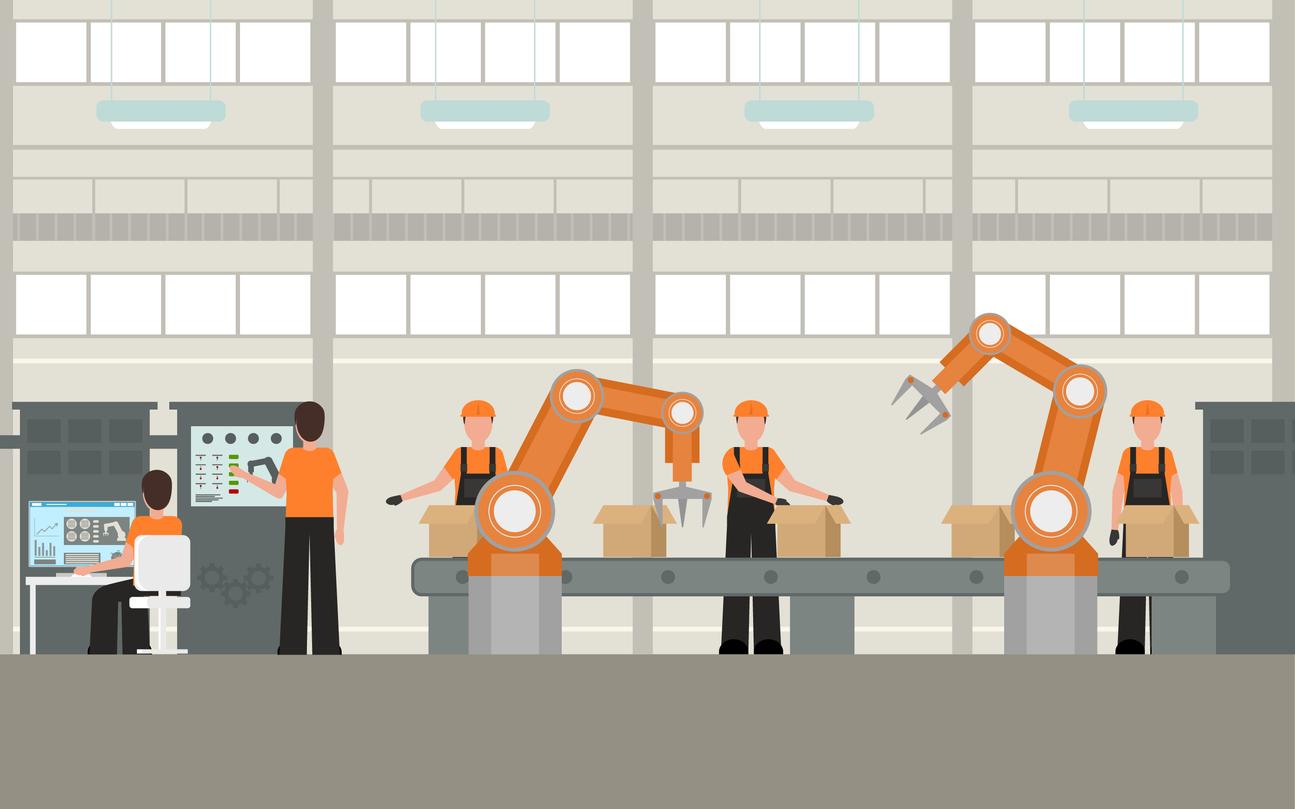
Order Management for Manufacturers: You Don't Need a Full ERP
If you run a manufacturing operation that sells B2B - whether direct or through distributors - you've probably looked at software to manage orders. And you've probably been overwhelmed by what's out there.
Full ERP systems that want to run your entire business. MRP platforms with production scheduling you don't need. CRMs that track everything except what actually matters. Six-figure implementations with six-month timelines.
You don't need all that. You need to know what's been ordered, what's been shipped, and when to invoice.
The Actual Problem
Most manufacturers we talk to have a similar situation:
Orders come in via email, phone, or their distributor relationships
Someone enters them into QuickBooks (or tries to track them in spreadsheets)
Production happens however it happens - that part works fine
Shipping gets complicated because orders don't go out all at once
Tracking what's been shipped versus what's still owed becomes manual
End customer visibility disappears because the distributor is the customer of record
The accounting system handles accounting. But everything between "order received" and "invoice sent" is held together with spreadsheets, memory, and good intentions.
Why ERP Is Usually Wrong
When manufacturers look for solutions, the software industry pushes them toward enterprise resource planning systems. These platforms promise to handle everything: orders, production, inventory, HR, CRM, and accounting all in one place.
The pitch sounds good. The reality is different.
Implementation takes forever. Six months is optimistic. A year isn't unusual. You're paying consultants while your current problems continue.
The cost is massive. We've heard manufacturers quoted $250,000+ for first-year costs on mid-market ERP systems. That's before you account for the internal time spent on implementation.
You end up using 10% of it. Most ERP modules go untouched. You're paying for capabilities you'll never need, and the complexity of the full system makes the parts you do use harder to navigate.
Your existing systems get replaced. Maybe QuickBooks works fine for you. Maybe your production tracking spreadsheet is actually pretty good. ERP implementations typically want to replace everything, whether it needs replacing or not.
For a manufacturer doing $5M, $10M, even $20M in revenue, this is almost never the right answer.
What You Actually Need
Strip away the features you won't use, and the core requirements are straightforward:
A place for orders to live. When a distributor or customer places an order, it needs to exist somewhere other than an email inbox. It needs a status. It needs to be findable.
Visibility into who's ordering. Not just which distributor - which end customer. If you sell through distributors but ship to manufacturing plants, you need to know that the client manufacturing plant in South Carolina has ordered the same product three times this year.
Partial shipment tracking. Large orders don't ship all at once. You produce in batches. You ship what's ready. The system needs to track what's gone out and what's still owed.
Packing lists that make sense. When you ship, you need documentation that shows what's in the box. Not the full order - just this shipment.
A path to invoicing. When the order (or partial order) ships, you need to create an invoice. Ideally without retyping everything into your accounting system.
That's it. Order in, production happens (outside the system), shipment tracked, invoice created.
The Distributor Complexity
Many manufacturers sell through distributors rather than direct. This creates a tracking problem.
Your distributor is your customer. They place the order, they pay the invoice. But the product goes to their customer - a plant, a retailer, an end user.
If you only track the distributor, you lose visibility into:
Which end customers are actually using your products
Which relationships have recurring revenue potential
Where demand is actually coming from geographically
Which distributor salespeople are actually driving business
The solution is simple in concept: associate each order with both the distributor (who pays) and the end customer (who receives). But most basic order systems don't handle this. And most ERP systems make it way more complicated than it needs to be.
Batch Shipments and Partial Fulfillment
This is where spreadsheets really break down.
A customer orders 500 units. You ship 200 now, 150 next week, and the remaining 150 the week after. Each shipment needs a packing list. You need to know at any moment what's been shipped and what's outstanding. When the order is complete, you invoice.
Or maybe you invoice per shipment. Or maybe you invoice monthly regardless of shipments. The point is: the system needs to handle partial fulfillment as a normal workflow, not an exception.
Manufacturers who try to manage this in QuickBooks end up with workarounds. Multiple sales orders. Manual tracking sheets. Notes in the memo field. It works until it doesn't - usually when you're trying to figure out why a customer is upset about a shipment you thought was complete.
What to Look For
If you're evaluating order management software as a manufacturer, here are the questions that matter:
Does it handle partial shipments natively? Not as a workaround. As a core feature. Can you mark 50 of 100 units shipped and have the system track the remaining 50?
Can you track end customers separately from billing customers? If you sell through distributors, this is essential.
Does it connect to QuickBooks? Or whatever accounting system you use. The goal is to eliminate double entry, not create more of it.
Can you generate packing lists per shipment? With your branding, showing only what's in that shipment, with the fields you actually want visible?
Is it appropriately sized for your business? A $250/month solution that does what you need is better than a $250,000 solution that does everything.
The Integration Question
Whatever you choose, it needs to work with your accounting system. For most manufacturers under $50M in revenue, that's QuickBooks - Online or Desktop.
The right integration means:
Products sync from QuickBooks (you're not maintaining two catalogs)
Invoices push to QuickBooks when you're ready (you're not retyping them)
Inventory stays accurate (orders affect available quantities)
Your accountant doesn't need to learn a new system
If the order management system requires replacing QuickBooks, ask yourself whether that's actually necessary - or whether it's just how that vendor makes money.
A Simpler Path
The manufacturers who solve this most efficiently share a common approach:
Keep QuickBooks for accounting.
It works. Your accountant knows it. Don't fix what isn't broken.
Add order management that fits.
Something purpose-built for B2B orders, with the specific features manufacturers need (partial shipments, end customer tracking, packing lists).
Give distributors self-service if possible.
A portal where they can place orders, check status, and see history - without calling you.
Connect the systems.
Orders flow through your process, then push to QuickBooks as invoices. One source of truth for accounting, proper tracking for operations.
This isn't a six-month implementation. It's a few weeks. And it solves the actual problem without creating new ones.
The Bottom Line
Manufacturing is complicated enough. Your order management doesn't need to be.
If you're tracking orders in spreadsheets, losing visibility into end customers, or struggling with partial shipments - you have a real problem worth solving. But the solution probably isn't a quarter-million-dollar ERP system.
Look for software that handles what you actually need, connects to what you already have, and doesn't require a consultant to explain how to use it.
Orderwerks is B2B ordering software that handles partial shipments, end customer tracking, and distributor relationships — with QuickBooks integration built in. Learn more about Orderwerks for manufacturers or schedule a demo.